1. Selection, seasoning and drying
We consider the species, grain and natural features of the timber. Its intended use matters too: a large tabletop may call for a different character from a small front or furniture leg.
Seasoning and drying form part of the preparation for further work. They require care and experience. Appearance alone is not enough to decide how material should be used in a particular construction.
2. Board selection, joining and machining
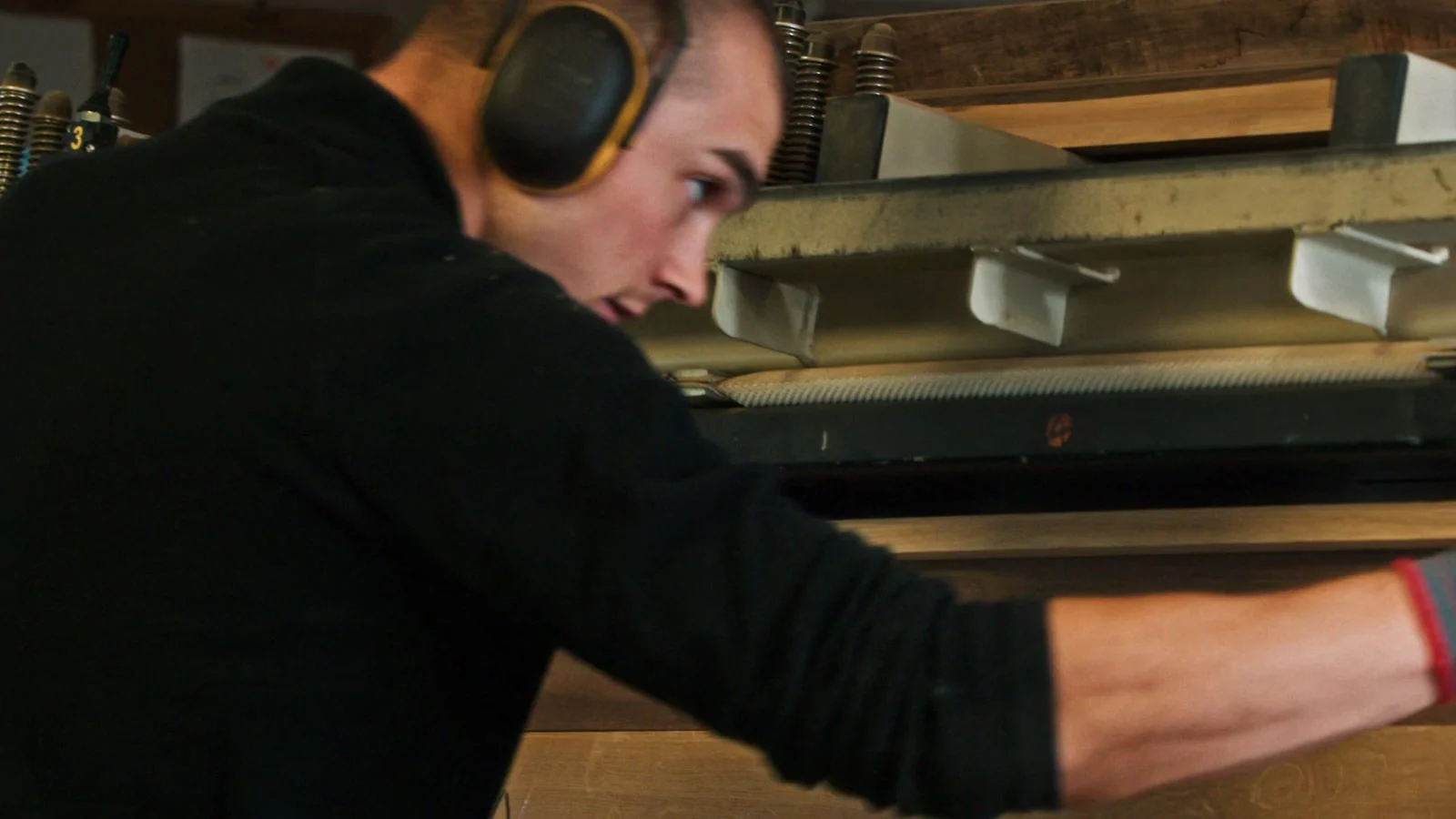
Boards are arranged with their grain and colour in mind. This establishes the appearance of the complete surface before the elements are joined and machined further.
Technology supports accurate shapes and connections. Surfaces, edges and details that people touch in everyday use are refined by hand.
3. Refining the form and details
The tabletop profile, component thicknesses, divisions between fronts and connections between wood and metal need to work together. Accurate dimensions matter, but so do the surface, the line of an edge and the fit between adjacent parts.
Different constructions call for a different scope at each stage. A tabletop, a chest of drawers and wooden shelving present different requirements. The process follows the design, rather than one fixed sequence applied unchanged to every piece.
Useful to know
Why do pieces made from the same wood look different?
Each board has its own grain, tone and natural features. Selection brings these differences into the design without removing the individual character of the wood.
What do technology and handwork each contribute?
Machining supports accurate shapes and connections. Human experience is needed to select boards and refine surfaces, edges and details.
Is every piece made in the same way?
The main stages are shared, but their scope and sequence depend on construction, material and finish. A simple top differs from furniture with many connected components.